Tag Archive for kingdom of god

Prophets of a Future Not Our Own – Oscar Romero

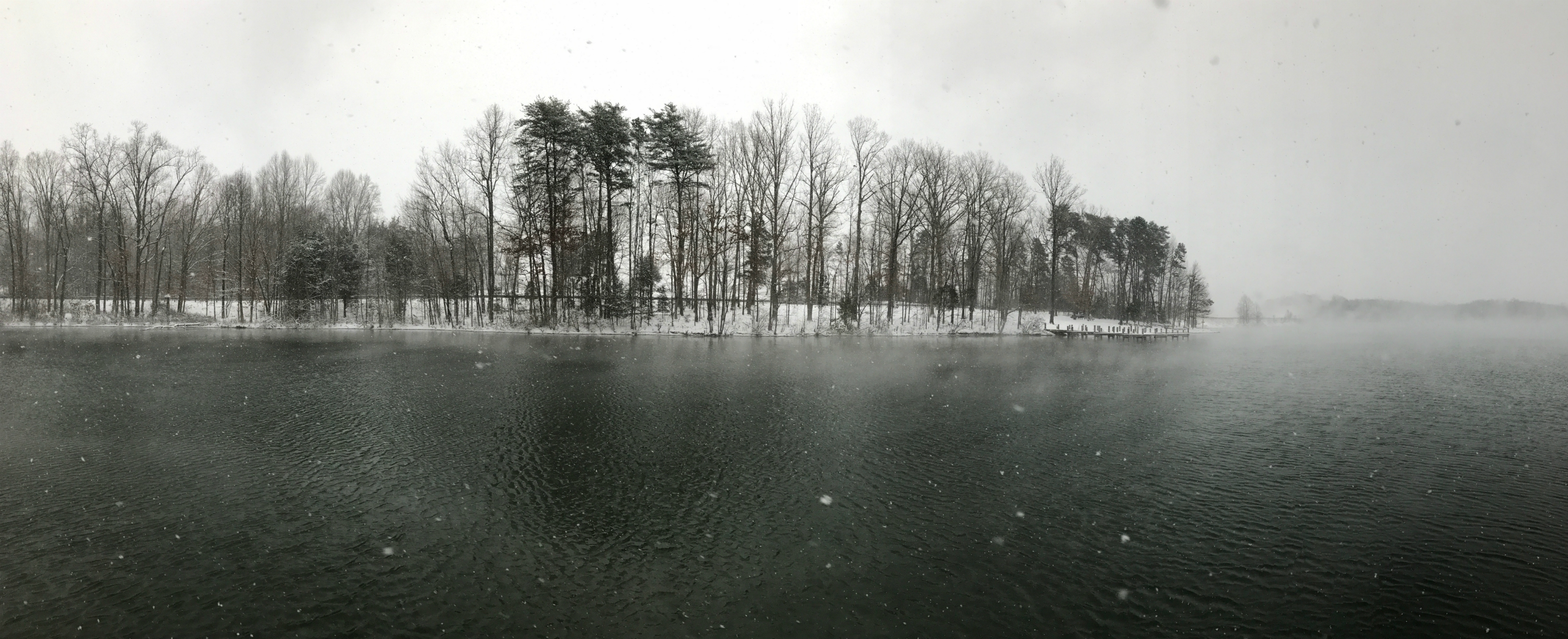
Reposting this beautiful piece–”Prophets of a Future Not Our Own”–in honor of Archbishop Oscar Romero, assassinated March 24, 1980. A champion for the poor, the oppressed, and the gospel.

It helps now and then to step back and take a long view. The kingdom is not only beyond our efforts, it is even beyond our vision.

We accomplish in our lifetime only a small fraction of the magnificent enterprise that is God’s work. Nothing we do is complete, which is another way of saying that the kingdom always lies beyond us.

No statement says all that could be said. No prayer fully expresses our faith. No confession brings perfection. No pastoral visit brings wholeness. No program accomplishes the Church’s mission. No set of goals and objectives includes everything.

This is what we are about: We plant the seeds that will one day grow. We water seeds already planted, knowing  that they hold future promise. We lay foundations that will need further development. We provide yeast that produces effects  far beyond our capabilities.

We cannot do everything, and there is a sense  of liberation in realizing that. This enables us to do something, and to do it well. It may be incomplete but it is a beginning, a step along the way, an opportunity for the Lord’s grace to enter and do the rest.

We may never see the end results, but that is the difference between the master builder and the worker. We are workers, not master builders; ministers, not messiahs.

We are prophets of a future not our own.

[Yeah, I know I posted this exact same thing and same photo a year ago. But you wouldn't have known that without the helpful "Related Posts" link below, would you?]

Certain truths don’t change

A reminder for Monday morning:

certain truths remain unchanged: God remains sovereign, grace beats sin, prayers get heard, the Bible endures, heaven’s mercies spring up new every morning, the cross still testifies to the power of sacrificial love, the tomb is still empty, and the kingdom that Jesus announced is still expanding without needing to be bailed out by human efforts.

John Ortberg, The Me I Want To Be, 242

Remembering Óscar Romero

Thirty years ago, on March 24, 1980, Óscar Romero, Archbishop of San Salvador, human rights activist, advocate for the poor and the victims of the Salvadoran civil war, was assassinated as he closed his homily during Mass.

I have these words of his written in my journal to serve as a reminder and encouragement to be faithful to what God has called me to:

It helps, now and then, to step back and take a long view. The kingdom is not only beyond our efforts, it is even beyond our vision. We accomplish in our lifetime only a tiny fraction of the magnificent enterprise that is God’s work. Nothing we do is complete, which is a way of saying that the Kingdom always lies beyond us.

No statement says all that could be said. No prayer fully expresses our faith. No confession brings perfection. No pastoral visit brings wholeness. No program accomplishes the Church’s mission. No set of goals and objectives includes everything.

This is what we are about. We plant the seeds that one day will grow. We water seeds already planted, knowing that they hold future promise. We lay foundations that will need further development. We provide yeast that produces far beyond our capabilities. We cannot do everything, and there is a sense of liberation in realizing that.

This enables us to do something, and to do it very well. It may be incomplete, but it is a beginning, a step along the way, an opportunity for the Lord’s grace to enter and do the rest. We may never see the end results, but that is the difference between the master builder and the worker. We are workers, not master builders; ministers, not messiahs. We are prophets of a future not our own.

Young Christians lament injustice

Last night, I was privileged to lead hundreds of young Christians in a time of lament as part of the Poverty and Advocacy track at Urbana 2009. We came together to cry out to God on behalf of those suffering from injustice and oppression, and particularly, as part of the Human Wrong Initiative, on behalf of millions of children trapped in modern slavery: in forced prostitution, forced labor, or recruited to be child soldiers. We came together to mourn the wrong that we see in the world, following the biblical precedents of the psalmists, of the prophets, and of Jesus, in engaging with God in prayer to seek change.

My role was to prepare the way for lament: to lay the biblical foundations, to provide a framework for engaging in lament, and to encourage a safe environment in which lament could take place. The rest was up to the students and God.

And boy, did we meet with God …

One of the last points that I made was that biblical lament stirs us to action and partnership with God. In Luke 19, Jesus wept over Jerusalem. He cried, “Oh, if you only knew the things that make for peace …” And then he went and cleared the temple. My prayer for those who engaged last night is that they use that session as a launching pad to do great and mighty things in the service of the kingdom of God.

[You can find recorded webcasts of the main Urbana 09 events here.]

A Boy is Shot and I Wonder Why I Do What I Do

Last night I walked down 14th Street NW, past Columbia Ave where a police car was parked, blocking entry to the street; and I watched people milling about, heading home after work. A wave of emotion hit me like a sucker-punch as I wondered how many of them knew that they were walking past the place where, two nights previously, nine year-old Oscar Fuentes was shot and killed.

I whispered a prayer for Oscar’s grieving family, and as I did so, I was reminded with startling clarity of a few of the reasons I do what I do:

Because I believe that the God I serve weeps over every life that is lost—including a nine year-old boy named Oscar Fuentes—I live and work for a world where every person is valued and honored for the image of God within him or her, regardless of how smudged and tainted this image has become (Genesis 1-3).

Because I believe that when Jesus told us to pray that God’s kingdom would come on earth—of which the evidence would be God’s will done on earth as in heaven (Matthew 6:10)—he wanted us to envision a world where there are no more tears, where mourning and crying and pain are no more (Revelation 21), I seek to live and work with the Spirit who is already at work in our world to see this come to pass, as elusive and impossible as this may be this side of Christ’s return.

Because I believe that day of the Lord—when nations shall beat their swords into plowshares and their spears into pruning hooks (Isaiah 2:4)—was inaugurated by the coming of Jesus, I live and work for a world characterized by a peace that is not simply an absence of violence and war but a wholeness of relationships with God, with others, with oneself, and with creation.

Because I believe that the redemption and salvation that came with Jesus Christ are not just a personal gift but a calling to a life that places others before ourselves (Philippians 2), I live and work for a world in which those who have not and cannot experience the many freedoms that I have may know those same freedoms.

“How long, O Lord?” the psalmists lament on many, many, many occasions. And for good reason: we live in the interim between Christ’s resurrection and his return, in the painful in-between. There remains much that is broken and sin-stained, and often we groan with creation as we hope for the promises to come (Romans 8).

But when I start feeling paralyzed by the sheer size of the challenges facing those of us who seek to live out the kingdom of God on earth, when I start wondering why I’m doing what I’m doing, when I get a little overwhelmed by the sheer number of things that are in need of repair and redemption, I look at the picture of Oscar Fuentes, newly stuck up on my wall next to pictures of my nieces and nephews, aged between 18 months and 13 years.

I remember that God so loved the world that he sent his only Son to save us all (John 3:16-17), that we might have life abundantly (John 10:10), and in this blessing we might carry out the ancient commission to be a blessing to others (Genesis 12:1-3). And I remember why I do what I do.

“From everyone to whom much is given, much will be required; and from the one to whom much has been entrusted, even more will be demanded.” (Luke 12:48)